


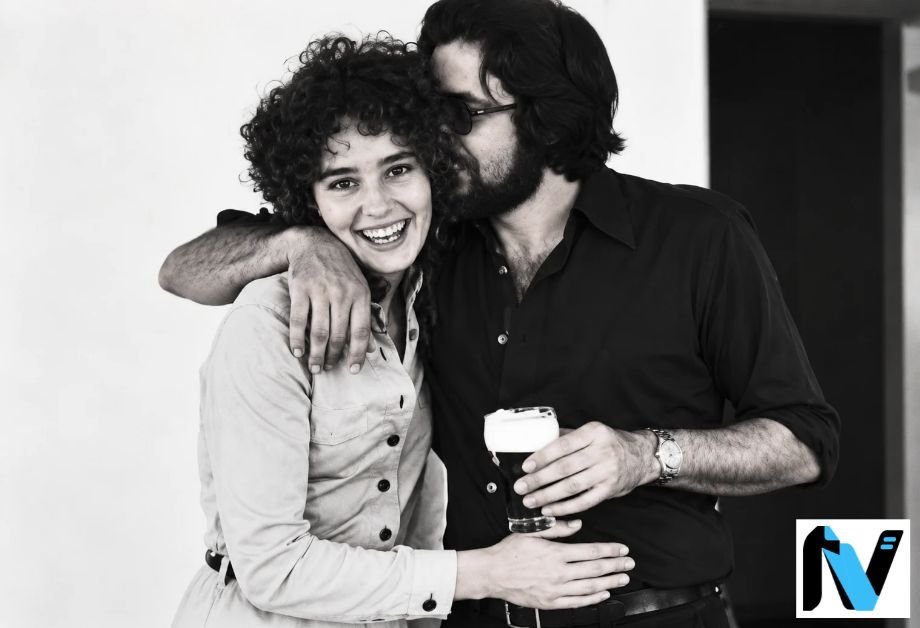
Paco Grande is a Spanish photographer and filmmaker best known publicly as the first husband of actress Jessica Lange. Born in 1943, Grande was part of an artistic circle that included photographers and filmmakers such as Robert Frank and Danny Seymour, and his work extended into documentary photography of Spanish flamenco culture. His relationship with Lange began before her Hollywood career, when photography was an important part of both of their lives.
Although Grande is often introduced simply through his marriage to Lange, his own work provides a broader picture of his life. He participated in experimental film, photographed the flamenco world of southern Spain, and helped introduce Lange to photography—an art form she later pursued seriously alongside acting.
Quick Facts About Paco Grande
| Detail | Information |
|---|---|
| Full Name | Francisco “Paco” Grande |
| Known As | Paco Grande |
| Birth Year | 1943 |
| Birthplace | Madrid, Spain |
| Nationality | Spanish |
| Profession | Photographer and filmmaker |
| Father | Francisco Grande Covián |
| Former Spouse | Jessica Lange |
| Marriage | 1970 |
| Divorce | 1982 |
| Children With Jessica Lange | None |
| Known For | Photography, flamenco documentation, marriage to Jessica Lange |
| Notable Film Connection | Home Is Where the Heart Is |
| Medical Condition | Retinitis pigmentosa |
Who Is Paco Grande?
Francisco “Paco” Grande is a Spanish photographer whose life became closely connected with Jessica Lange during the years before she established herself as an actress. Institutional records identify him as a photographer born in Madrid in 1943, distinguishing him from the younger Spanish sports journalist who shares the name Paco Grande.
His career was rooted in photography rather than celebrity. During the late 1960s and early 1970s, Grande moved through artistic communities in the United States and Europe and developed connections with photographers and filmmakers including Danny Seymour and Robert Frank. His work also brought him into close contact with the traditional flamenco culture of Andalucía.
Grande’s place in Lange’s life was significant beyond their marriage. Lange has publicly credited him with introducing her to photography, which later became an important part of her creative career.
Paco Grande Was Born Into a Prominent Spanish Family
Grande was born in Spain in 1943. Institutional material connected with his photography identifies Madrid as his birthplace, although some less authoritative accounts have associated him with Asturias.
The Asturian connection is understandable because his father, Francisco Grande Covián, had deep roots in the region. Grande Covián was a respected Spanish physician, physiologist and nutrition scientist who became internationally recognized for his research in nutrition and metabolism.
His father’s academic career also created connections between the family and the United States. Francisco Grande Covián worked at the University of Minnesota, a location that would later become important in Paco Grande’s own story.
Detailed information about Paco’s childhood, siblings and early schooling has not been extensively documented in reliable public sources. Claims about those areas should therefore be treated cautiously rather than filled in from unsourced biography websites.
How Paco Grande Met Jessica Lange
Paco Grande met Jessica Lange through the University of Minnesota’s art and photography environment during the late 1960s. Lange had received a scholarship to study fine arts, but her education soon expanded beyond painting.
Photography became one of the subjects she explored, and Grande played an important role in that development. Lange has described him in interviews as her photography teacher and credited him with introducing her to the medium.
Their relationship developed rapidly. Instead of following a conventional university path, Lange and Grande became part of a more itinerant artistic world that took them from Minnesota to Europe.
The experience was important for Lange long after their relationship ended. Decades later, when she had become internationally famous for acting, she continued producing and exhibiting her own photography.
Their Journey Through Spain and Paris
One of the most interesting periods in Grande and Lange’s early relationship came when they left the United States for Europe.
Lange has recalled travelling with Grande through Spain, including Madrid, Andalucía and Asturias. Their journey eventually took them to Paris during the social and political upheaval surrounding May 1968.
Grande later gave his own account of their Spanish travels. He remembered encountering the flamenco community around Morón de la Frontera, an experience that became important to his photographic interests.
Their travels were not simply vacations. They placed the young couple within a broader European artistic environment at a time when photography, experimental cinema and countercultural movements were intersecting.
Paco Grande’s Photography Career
Grande’s career deserves more attention than it receives in biographies focused primarily on Jessica Lange.
Photography placed him within an international artistic network during the late 1960s. His interests included documentary work, experimental filmmaking and the visual culture surrounding flamenco in southern Spain.
Rather than approaching flamenco primarily as staged entertainment, Grande and other photographers associated with the period documented performers and communities in more intimate settings. These photographs eventually gained historical value as records of a cultural world that was changing rapidly.
Grande’s work later appeared within Flamenco Project, an initiative preserving photographs made by foreign and internationally connected photographers who encountered Andalucía’s flamenco culture during the 1960s and 1970s.
The project included Grande alongside photographers such as Daniel “Danny” Seymour, George Krause and Steve Kahn. Exhibitions connected with the collection have helped preserve Grande’s photographic identity independently of his relationship with Lange.
His Friendship With Danny Seymour and Robert Frank
Grande’s artistic network included two particularly important names: Danny Seymour and Robert Frank.
Seymour was a photographer and filmmaker whose unconventional life and work connected him with artists across Europe and the United States. Grande developed a close friendship with him and participated in projects connected with Seymour’s filmmaking.
Grande also knew Robert Frank, one of the most influential photographers of the 20th century. Their connection was more substantial than a casual professional acquaintance.
During the late 1960s, Grande, Lange, Seymour and Frank were associated with the same building at 184 Bowery in Manhattan. Auction documentation for a Robert Frank photograph records that they lived there during roughly 1968 to the summer of 1969 and describes them as close friends.
A Robert Frank print bearing a personal dedication to Grande provides additional documentary evidence of that relationship.
This period places Grande inside a noteworthy chapter of New York’s experimental photography and film culture rather than on its margins.
Paco Grande and Flamencología
Grande’s involvement with flamenco also extended into filmmaking.
Archival material from the Filmoteca de Catalunya identifies him with Flamencología, an experimental documentary associated with Grande and Daniel Seymour and dating from approximately 1969–1970.
The project documented flamenco around Setenil de las Bodegas and Morón de la Frontera. These locations were closely connected with traditional flamenco communities, including the circle surrounding guitarist Diego del Gastor.
Grande’s photographs from this environment later became part of the larger historical record represented by Flamenco Project. The connection helps explain why reducing his career to “Jessica Lange’s photographer husband” leaves out an important part of his work.
Paco Grande Appeared in Home Is Where the Heart Is
Grande also appeared on screen in an experimental short film connected with the same artistic circle.
Danny Seymour directed the 1971 film Home Is Where the Heart Is, with Robert Frank working as cinematographer. The film featured Grande, Jessica Lange and Seymour.
In the short, Lange played a diner waitress while Grande appeared as a restless drifter. Their participation came years before Lange’s breakthrough as a professional actress.
The film is especially notable in retrospect because it captures Grande and Lange within the experimental art world they inhabited before Hollywood transformed Lange into an international star.
Paco Grande and Jessica Lange Married in 1970
Grande and Lange married in 1970 after the years they had spent travelling and moving between artistic communities.
Their marriage belonged to a very different stage of Lange’s life from the one most audiences know. She had not yet become the actress associated with films such as King Kong, Tootsie and Frances. Photography, travel and the artistic circles around Grande were central to her life during those earlier years.
The relationship eventually became increasingly complicated. By the middle of the 1970s, their lives had begun moving in different directions, while Lange’s professional circumstances were also changing.
Contemporary and retrospective sources are not completely consistent about every date associated with the marriage. The strongest overall chronology supports a 1970 marriage and a divorce finalized in 1982.
Why Did Paco Grande and Jessica Lange Divorce?
Grande and Lange had effectively separated well before their divorce was completed. Their relationship went through periods of separation and reconciliation before ending permanently.
One sensitive aspect of their history concerns Grande’s deteriorating eyesight. He developed retinitis pigmentosa, a progressive retinal disorder that caused severe vision loss and eventually left him legally blind.
Some contemporary coverage linked his condition to the breakdown of the marriage. That interpretation should not be presented as an established explanation for their divorce.
Lange later directly rejected the simplified claim that she abandoned Grande because he was losing his sight. Her recollections describe a more complicated relationship that had already undergone serious difficulties.
Their divorce proceedings became public in the early 1980s, and contemporary reporting documented Grande seeking financial support during the case. The divorce was ultimately completed around 1982.
Paco Grande Lost His Sight to Retinitis Pigmentosa
Retinitis pigmentosa had a profound effect on Grande’s life.
The condition refers to a group of inherited retinal disorders that progressively damage the cells responsible for vision. Grande’s eyesight deteriorated over time until he was described in contemporary reporting as legally blind.
His visual impairment inevitably had particular significance for someone whose professional life had revolved around photography.
Yet Grande did not disappear completely from artistic and cultural circles after losing his sight. Photographer John Fago later recalled travelling with him through Peru and Bolivia around 1981–1982, when Grande was already blind.
The episode provides a rare glimpse into his life during a period otherwise dominated in the public record by his divorce from Lange.
Did Paco Grande and Jessica Lange Have Children?
Paco Grande and Jessica Lange did not have children together.
Lange became a mother later through subsequent relationships. Her children should not be attributed to her marriage with Grande.
Historical reporting indicates that Grande later remarried. In a 1991 interview, Lange said that her former husband had remarried and had a young daughter at that time.
Because that information describes Grande’s circumstances more than three decades ago, it should not be used to make assumptions about his current marital or family situation.
What Happened to Paco Grande After Jessica Lange?
Grande largely withdrew from the level of public attention that surrounded his former wife.
His name continued to appear through photography exhibitions, recollections from other artists and historical projects connected with Danny Seymour and the flamenco photographs produced decades earlier.
Grande was still available for direct comment many years after the divorce. In 2015, he spoke to EL PAÍS from Wisconsin and recalled his travels through Spain with Lange, including their encounters with flamenco culture.
His historical work has also continued to surface through exhibitions of Flamenco Project. These later presentations are significant because they allow Grande’s photography to be considered on its own terms rather than solely as a footnote in Lange’s biography.
More recent material connected with the documentary project Kiss the Past Goodbye, about Danny Seymour, also identifies Francisco Grande as one of Seymour’s closest friends and connects him with the preservation of that artistic history.
Where Is Paco Grande Now?
Grande has maintained a private life, making his present circumstances difficult to establish reliably.
He was reported to be living in Wisconsin when EL PAÍS contacted him in 2015. Other older accounts have associated him with places including Cusco, Peru, but those references describe earlier periods and do not establish his current residence.
No reliable source reviewed for his biography provides a verified current address or recent place of residence.
There is likewise no reliable public report establishing his death. Since Grande was born in 1943, he would be approximately 82 or 83 in 2026 if living, depending on his birthday. His exact date of birth has not been reliably established in the public record.
For that reason, definitive claims that he is currently living in a particular country—or claims that he has died—should be avoided without stronger documentation.
Paco Grande’s Net Worth Is Not Publicly Known
There is no credible, independently documented estimate of Paco Grande’s net worth.
Historical reports concerning his finances relate primarily to his divorce proceedings and cannot reasonably be used to calculate his wealth decades later. Nor should Jessica Lange’s financial success be used as a basis for estimating Grande’s assets.
Precise net-worth figures occasionally attached to lesser-documented public figures online are often derived without transparent financial evidence. In Grande’s case, no authoritative financial source supports a specific amount.
His net worth is therefore not publicly confirmed.
Paco Grande’s Photographic Legacy
Grande’s most enduring public significance comes from two interconnected parts of his life.
The first is his influence on Jessica Lange. Their relationship began before fame, and Lange has continued to acknowledge his role in introducing her to photography. That connection gives Grande an unusual place in the artistic development of someone who later became known both as an Academy Award-winning actress and an accomplished photographer.
The second is his own documentary work. His involvement with Danny Seymour, Robert Frank, experimental film and Andalusian flamenco places him within a distinctive international artistic community of the late 1960s and early 1970s.
The preservation of his images through Flamenco Project is particularly important. It shifts the focus from whom Grande married to what he photographed and the cultural environment in which he worked.
Conclusion
Paco Grande is more than a figure from Jessica Lange’s personal history. The Spanish photographer participated in an influential artistic network involving Danny Seymour and Robert Frank, documented flamenco culture and played an important role in Lange’s introduction to photography.
His later loss of sight changed the course of his life, while his photographs continued to survive through archival and exhibition projects. Although much about his present life remains private, his documented work provides a clearer legacy than the celebrity-spouse label usually attached to his name.
Frequently Asked Questions
Who is Paco Grande?
Paco Grande, whose full name is Francisco Grande, is a Spanish photographer and filmmaker born in 1943. He is also known as Jessica Lange’s first husband and for his connections with photographers and filmmakers including Danny Seymour and Robert Frank.
How old is Paco Grande?
Grande was born in 1943. Because a reliable exact birth date has not been publicly established, he would be approximately 82 or 83 in 2026 if living.
Was Paco Grande Jessica Lange’s first husband?
Yes. Grande was Jessica Lange’s first husband. They married in 1970 after meeting through the University of Minnesota art and photography environment and divorced around 1982.
Did Paco Grande teach Jessica Lange photography?
Lange has publicly described Grande as her photography teacher and credited him with introducing her to photography. She later developed a substantial photographic practice of her own and exhibited her work internationally.
Why did Paco Grande become blind?
Grande developed retinitis pigmentosa, a progressive retinal disorder that caused severe vision loss. Contemporary reports described him as legally blind by the period surrounding his divorce from Lange.
What is Paco Grande’s net worth?
Paco Grande’s net worth is not publicly known. No authoritative financial reporting supports the specific estimates sometimes associated with public figures on biography websites.
